
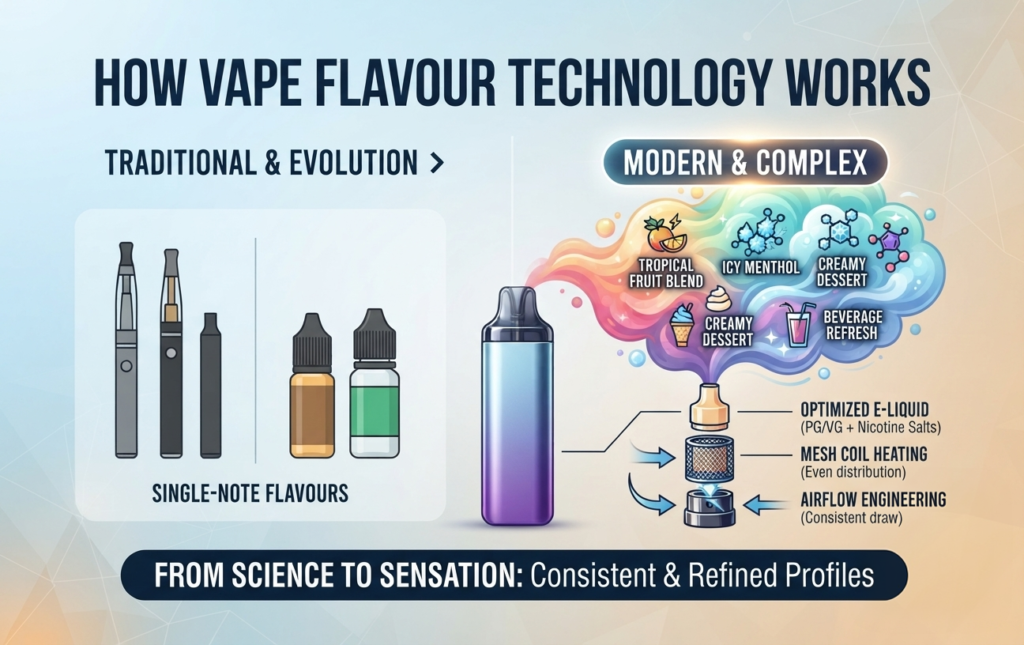
How Vape Flavour Technology Works: From Traditional Flavours to Modern Profiles
Flavour is one of the most important factors that shapes the vaping experience. While early electronic cigarettes focused mainly on providing an alternative to traditional smoking, modern vape technology has evolved into a sophisticated combination of flavour science, heating technology, and product design.
Today’s disposable vapes offer a wide variety of flavour profiles, from classic tobacco-inspired blends to complex fruit, beverage, and cooling combinations. Behind every flavour experience is a carefully developed process involving flavour formulation, e-liquid chemistry, heating systems, and airflow engineering.
In this guide, we explore how vape flavour technology works, how flavours have evolved over time, and why modern devices can deliver more consistent and refined flavour experiences.
The Evolution of Vape Flavours
The earliest generations of electronic cigarettes were relatively simple. Most products focused on recreating the familiar experience of traditional tobacco flavours.
Early vape flavours typically included:
- Classic tobacco
- Menthol
- Simple fruit flavours
As vaping technology improved, manufacturers began experimenting with more complex flavour combinations.
Modern vape users now have access to:
- Tropical fruit blends
- Ice and cooling profiles
- Dessert-inspired flavours
- Beverage flavours
- Multi-layer flavour combinations
This evolution reflects a shift from simply replacing smoking to creating a broader sensory experience.
How Vape Flavour Is Created
Vape flavour development involves combining different flavour components to create a balanced profile.
A vape flavour typically consists of:
1. Flavour Compounds
Flavour compounds are carefully selected ingredients used to create specific taste characteristics.
For example:
Fruit flavours may combine different notes to create:
- Sweetness
- Freshness
- Tartness
- Juicy sensations
A single flavour profile may contain multiple components working together to create a more realistic experience.
2. Base Ingredients
The main base ingredients in e-liquid commonly include:
Propylene Glycol (PG)
PG is often associated with:
- Stronger flavour delivery
- A clearer flavour sensation
- A more noticeable throat sensation
Vegetable Glycerin (VG)
VG is commonly associated with:
- Smoother vapour
- Increased vapour production
- A softer mouthfeel
The balance between PG and VG can influence how flavours are experienced.
3. Nicotine Formulation
For products containing nicotine, the nicotine formulation can also influence the overall experience.
Nicotine salts are widely used in modern disposable vapes because they are designed to provide a smoother experience compared with some traditional nicotine formulations.
The interaction between nicotine type, flavour formulation, and device technology contributes to the final user experience.
Why Modern Vape Flavours Are More Complex
Modern flavour development focuses on creating multi-layered profiles rather than single-note flavours.
For example, a modern fruit flavour may include:
First impression:
A fresh fruit note when inhaling
Middle sensation:
A combination of sweetness and body
Final note:
A cooling or refreshing finish
This approach creates a more dynamic experience compared with earlier simple flavour designs.
The Role of Heating Technology in Flavour Performance
Flavour quality is not determined only by the e-liquid itself.
The heating system plays an equally important role.
The coil converts e-liquid into aerosol, and the efficiency of this process affects:
- Flavour accuracy
- Vapour consistency
- Overall smoothness
Traditional Coil vs Mesh Coil Technology
Traditional Coil Systems
Earlier vape devices often used traditional wire coil designs.
Characteristics:
- Simple heating structure
- Limited heating surface area
- Different flavour consistency depending on usage
Mesh Coil Systems
Modern disposable vapes increasingly use mesh coil technology.
Mesh coils use a larger heating surface, which can provide:
- More even heating
- Faster response
- Better flavour consistency
A more uniform heating process helps reduce areas that may become overheated, allowing flavour profiles to remain more stable.
How Airflow Design Influences Flavour
Flavour is also affected by airflow.
The amount of air entering a device changes how vapour is produced and experienced.
A balanced airflow system helps control:
- Vapour temperature
- Flavour concentration
- Smoothness of inhalation
For example:
Restricted airflow:
- More concentrated flavour
- Warmer vapour
- Stronger sensation
Open airflow:
- Cooler vapour
- Smoother inhalation
- Larger vapour volume
Modern vape designs aim to find the right balance between airflow and flavour intensity.
The Science Behind Cooling Flavours
Cooling flavours have become increasingly popular in modern disposable vapes.
Unlike traditional mint flavours, modern cooling profiles often use advanced cooling ingredients to create a refreshing sensation without overwhelming the original flavour.
Examples include:
- Fruit ice combinations
- Tropical cooling blends
- Berry freshness profiles
The challenge for flavour developers is maintaining balance:
Too much cooling can overpower the flavour.
Too little cooling may not create the desired refreshing experience.
How Flavour Technology Creates Better Consistency
One challenge with disposable vapes is maintaining consistent performance from the first puff to the final puff.
Modern designs address this through:
Optimized e-liquid formulation
Ensuring flavour ingredients remain balanced throughout the device lifespan.
Improved heating systems
Providing more consistent vaporisation.
Better airflow engineering
Helping maintain stable vapour delivery.
Advanced device control systems
Managing battery output and heating performance.
Together, these technologies help create a more reliable flavour experience.
Popular Modern Vape Flavour Categories
Fruit Flavours
One of the most popular categories worldwide.
Common profiles include:
- Strawberry
- Watermelon
- Mango
- Blueberry
- Mixed berries
Fruit flavours are popular because they offer a fresh and approachable experience.
Ice and Cooling Flavours
Cooling profiles provide a refreshing sensation.
Popular combinations include:
- Mint
- Fruit ice
- Frozen berries
- Tropical ice
Beverage Flavours
Inspired by popular drinks.
Examples:
- Cola
- Energy drinks
- Lemon beverages
- Fruit drinks
Dessert Flavours
Designed for users who enjoy sweeter profiles.
Examples:
- Cream flavours
- Candy-inspired blends
- Bakery-inspired notes
How ALIBARBAR Uses Modern Flavour Technology
Modern disposable vape brands focus heavily on flavour development because flavour consistency is a key part of the user experience.
The ALIBARBAR INGOT series combines:
- Advanced heating technology
- Optimized airflow design
- High-capacity e-liquid systems
- Carefully developed flavour profiles
The goal is to create a balanced experience where flavour, vapour production, and device performance work together.
Rather than relying on a single flavour note, modern vape technology focuses on creating complete flavour experiences.
How to Choose the Right Vape Flavour Profile
Choosing a flavour often depends on personal preference.
If you prefer refreshing flavours:
Consider:
- Fruit ice blends
- Mint profiles
- Cooling combinations
If you prefer natural sweetness:
Consider:
- Fruit flavours
- Tropical blends
- Berry combinations
If you prefer traditional experiences:
Consider:
- Tobacco-inspired profiles
- Classic flavours
The Future of Vape Flavour Technology
The future of vape flavour development is likely to focus on:
- More precise flavour balancing
- Improved heating efficiency
- More personalised experiences
- Better consistency throughout device usage
As hardware and flavour science continue to develop, disposable vapes are becoming increasingly sophisticated products combining engineering and sensory design.
Final Thoughts
Vape flavour technology has evolved significantly from simple tobacco and menthol options into a complex field combining chemistry, engineering, and user experience design.
Modern flavour profiles are created through the interaction of:
- Advanced flavour formulation
- Improved e-liquid technology
- Mesh coil heating systems
- Optimized airflow designs
Understanding how vape flavours are created helps users better appreciate the technology behind every puff.
From traditional flavours to modern multi-layer profiles, the future of vaping continues to focus on delivering more consistent, refined, and enjoyable experiences.
References & Data Sources
- National Academies of Sciences, Engineering, and Medicine – Public Health Consequences of E-Cigarettes (Device Characteristics and Aerosol Chemistry)
https://nap.nationalacademies.org/catalog/24952/public-health-consequences-of-e-cigarettes - U.S. Food and Drug Administration (FDA) – Vaporizers, E-Cigarettes, and Electronic Nicotine Delivery Systems (ENDS)
https://www.fda.gov/tobacco-products/products-ingredients-components/e-cigarettes-vapes-and-other-electronic-nicotine-delivery-systems-ends - Centers for Disease Control and Prevention (CDC) – Electronic Cigarettes and Vaping Information
https://www.cdc.gov/tobacco/basic_information/e-cigarettes/ - American Chemical Society – Flavor Chemistry and Sensory Science Research
https://www.acs.org - Journal of Aerosol Science – Research on Aerosol Formation, Particle Characteristics and Electronic Device Performance
https://www.sciencedirect.com/journal/journal-of-aerosol-science - Tobacco Control Journal – Research on Electronic Cigarette Product Characteristics and User Experience
https://tobaccocontrol.bmj.com/