
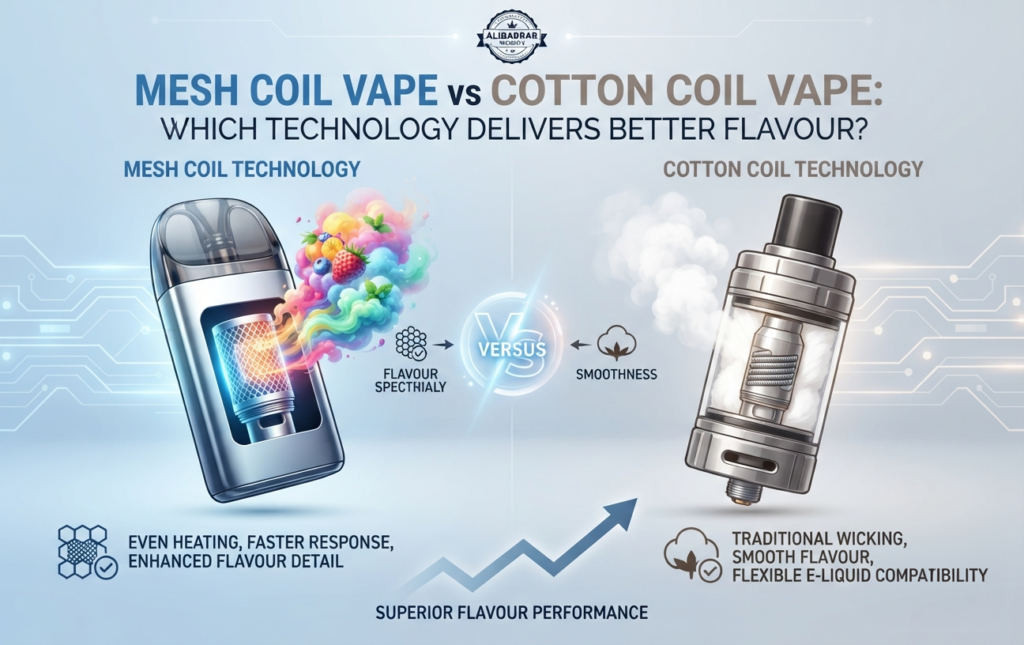
Mesh Coil Vape vs Cotton Coil Vape: Which Technology Delivers Better Flavour?
When choosing a vape device, flavour quality is one of the most important factors for many users. While e-liquid formulation plays a major role, the heating technology inside the device is equally important.
The coil is the component responsible for converting e-liquid into vapour, and different coil designs can create noticeably different experiences.
Two common technologies used in modern vape devices are:
- Mesh coil technology
- Traditional cotton coil technology
Both systems have their own advantages, but they work differently and provide different approaches to flavour delivery.
In this guide, we compare mesh coil vapes and cotton coil vapes, explaining how each technology works and which one may provide a better flavour experience.
What Is a Vape Coil?
A vape coil is the heating element inside a vape device.
When a user activates the device, the battery sends power to the coil, which heats the e-liquid absorbed by the surrounding material. The liquid is then transformed into an aerosol that users inhale.
The coil system affects:
- Flavour intensity
- Vapour production
- Heating speed
- Consistency
- Overall vaping experience
The relationship between the coil, e-liquid, airflow, and battery power determines how accurately flavours are delivered.
What Is a Cotton Coil Vape?
A cotton coil system uses a traditional heating wire wrapped around or positioned near an absorbent cotton wick.
The cotton acts as the material that holds and transfers e-liquid to the heating element.
The basic process:
- E-liquid is absorbed into the cotton wick.
- The coil heats the saturated cotton area.
- The e-liquid is vaporised.
- Vapour is produced through the airflow system.
Cotton coil technology has been widely used in traditional vape devices for many years and remains popular among many users.
Advantages of Cotton Coil Technology
1. Familiar and Established Design
Cotton coil systems have been developed and refined over many years.
Advantages include:
- Proven technology
- Wide compatibility
- Simple design structure
Many experienced vape users are familiar with cotton-based systems because they have been widely used in refillable tanks and pod devices.
2. Smooth Flavour Delivery
Cotton wicks can provide a soft and natural flavour experience.
Many users appreciate cotton coil systems because they can deliver:
- Smooth vapour
- Balanced flavour
- Comfortable inhalation
The cotton material allows e-liquid to saturate gradually, creating a traditional vaping sensation.
3. Flexible E-Liquid Compatibility
Cotton coil systems can work with a wide range of e-liquid formulations.
Depending on the coil design, they can support different:
- VG/PG ratios
- Nicotine formulations
- Flavour profiles
Limitations of Cotton Coil Technology
Despite its advantages, cotton coil technology also has some limitations.
Slower Heating Response
Because heat must transfer through the wire coil structure, some cotton coil systems may take slightly longer to reach optimal temperature.
Uneven Heating Possibility
Traditional wire coils heat from specific points, which can sometimes create uneven heating across the coil surface.
This may affect:
- Flavour consistency
- Vapour production
- Coil lifespan
Maintenance Requirements
In refillable devices, cotton coils often require replacement when:
- Flavour becomes weaker
- Vapour production decreases
- The coil becomes saturated with residue
What Is a Mesh Coil Vape?
A mesh coil uses a thin metal mesh structure instead of a traditional wire coil.
The mesh contains many small openings, creating a larger heating surface area.
The process:
- E-liquid is absorbed into the surrounding material.
- The mesh surface heats evenly.
- A larger area of e-liquid is vaporised simultaneously.
- Vapour is produced with consistent flavour delivery.
Mesh coil technology has become increasingly popular in modern disposable vapes and advanced pod systems.
Advantages of Mesh Coil Technology
1. More Even Heating
One of the biggest advantages of mesh coils is their larger heating surface.
Compared with traditional wire coils, mesh coils can distribute heat more evenly.
Benefits include:
✓ Consistent temperature distribution
✓ Reduced hot spots
✓ More stable flavour performance
This helps create a smoother experience throughout device usage.
2. Faster Heating Response
Because mesh coils have a large surface area and efficient heat distribution, they can reach operating temperature quickly.
This can provide:
- Faster vapour production
- Immediate flavour delivery
- More responsive activation
This is especially useful in disposable devices designed for convenience.
3. Enhanced Flavour Detail
Many users prefer mesh coils because they can produce a more detailed flavour experience.
A larger heating surface allows more e-liquid to be vaporised evenly, which may help preserve complex flavour profiles.
This is particularly noticeable with:
- Fruit flavours
- Cooling flavours
- Multi-layer flavour combinations
4. Better Vapour Consistency
Modern mesh coil systems are often paired with:
- Advanced airflow design
- High-capacity batteries
- Optimized power control
This combination helps maintain consistent performance throughout the device lifespan.
Limitations of Mesh Coil Technology
Although mesh coils offer many advantages, they are not perfect.
Higher Design Requirements
Mesh coil systems require careful engineering between:
- Battery output
- Airflow
- E-liquid delivery
- Heating temperature
Poorly designed mesh systems may not deliver the expected performance.
Power Management Is Important
Because mesh coils heat efficiently, the device must provide appropriate power control.
Too much power may affect:
- Flavour balance
- Coil performance
- Device efficiency
Mesh Coil vs Cotton Coil: Direct Comparison
| Feature | Mesh Coil | Cotton Coil |
| Heating surface | Larger surface area | Smaller heating area |
| Heating speed | Faster response | Generally slower |
| Flavour consistency | Highly consistent | Depends on coil condition |
| Vapour production | Usually higher | Moderate to high |
| Maintenance | Often lower in disposable devices | Requires more maintenance |
| Technology generation | Newer | Traditional |
| Best suited for | Modern disposable and advanced devices | Traditional refillable systems |
Which Coil Technology Delivers Better Flavour?
The answer depends on what type of flavour experience users prefer.
Mesh Coil Experience
Mesh coils are often preferred by users who want:
- Strong flavour clarity
- Consistent performance
- Smooth vapour production
- Modern device technology
The larger heating surface allows more even vaporisation, which can help deliver complex flavour profiles.
Cotton Coil Experience
Cotton coils may appeal to users who prefer:
- Traditional vaping sensations
- Softer flavour delivery
- More control over e-liquid selection
Experienced users who enjoy adjusting settings and experimenting with different e-liquids may still prefer cotton-based systems.
Why Modern Disposable Vapes Are Moving Toward Mesh Coil Technology
The disposable vape market has changed significantly.
Earlier disposable devices focused mainly on:
- Compact design
- Basic heating systems
- Short-term convenience
Modern devices now focus on:
- Higher puff capacity
- Better flavour consistency
- Improved vapour quality
- More advanced heating technology
Mesh coil systems are well suited to this evolution because they work effectively with:
- Larger e-liquid capacities
- High-capacity batteries
- Advanced airflow systems
Products such as the ALIBARBAR INGOT series use modern heating technology designed to provide a balanced combination of flavour, vapour production, and consistency.
How Airflow Works Together With Coil Technology
Coil technology does not work alone.
The final flavour experience depends on the combination of:
- Coil design
- Airflow structure
- Battery performance
- E-liquid formulation
For example:
A high-quality mesh coil with poor airflow may not perform well.
A well-designed cotton coil with optimized airflow can still provide an enjoyable experience.
The best vape devices are created through the integration of multiple technologies.
How to Choose Between Mesh Coil and Cotton Coil
Choose Mesh Coil If You Prefer:
✓ Stronger flavour performance
✓ Faster activation
✓ Consistent vapour production
✓ Modern disposable vape technology
✓ Less maintenance
Choose Cotton Coil If You Prefer:
✓ Traditional vaping experience
✓ More customization options
✓ Experimenting with different e-liquids
✓ Refillable device systems
The Future of Vape Coil Technology
Vape coil technology continues to develop as manufacturers focus on improving:
- Heating efficiency
- Flavour accuracy
- Battery performance
- User convenience
Future innovations may include:
- More advanced heating materials
- Improved temperature control
- Smarter power management
- More personalised flavour experiences
As disposable vape technology continues to evolve, mesh coil systems are likely to remain an important part of premium device design.
Final Thoughts
Both mesh coil and cotton coil technologies have played important roles in the development of vaping.
Cotton coils represent traditional vape engineering and remain popular among users who value flexibility and customization.
Mesh coils represent a newer approach focused on efficiency, consistency, and flavour performance.
For modern disposable vapes, mesh coil technology often provides advantages in flavour delivery, heating speed, and overall consistency.
However, the best choice ultimately depends on personal preference, usage style, and the type of vaping experience you are looking for.
Understanding coil technology helps users make better decisions and appreciate the engineering behind every flavour experience.
References & Data Sources
- National Academies of Sciences, Engineering, and Medicine – Public Health Consequences of E-Cigarettes (Device Characteristics and Aerosol Formation)
https://nap.nationalacademies.org/catalog/24952/public-health-consequences-of-e-cigarettes - U.S. Food and Drug Administration (FDA) – Electronic Nicotine Delivery Systems (ENDS) Information
https://www.fda.gov/tobacco-products/products-ingredients-components/e-cigarettes-vapes-and-other-electronic-nicotine-delivery-systems-ends - Centers for Disease Control and Prevention (CDC) – Electronic Cigarettes and Vaping Information
https://www.cdc.gov/tobacco/basic_information/e-cigarettes/ - Journal of Aerosol Science – Research on Electronic Cigarette Aerosol Generation and Device Performance
https://www.sciencedirect.com/journal/journal-of-aerosol-science - American Chemical Society – Research on Flavor Chemistry and Aerosol Delivery Systems
https://www.acs.org - Tobacco Control Journal – Studies on Electronic Cigarette Device Characteristics and User Experience
https://tobaccocontrol.bmj.com/ - Battery University – Lithium-Ion Battery Performance and Power Management
https://batteryuniversity.com