
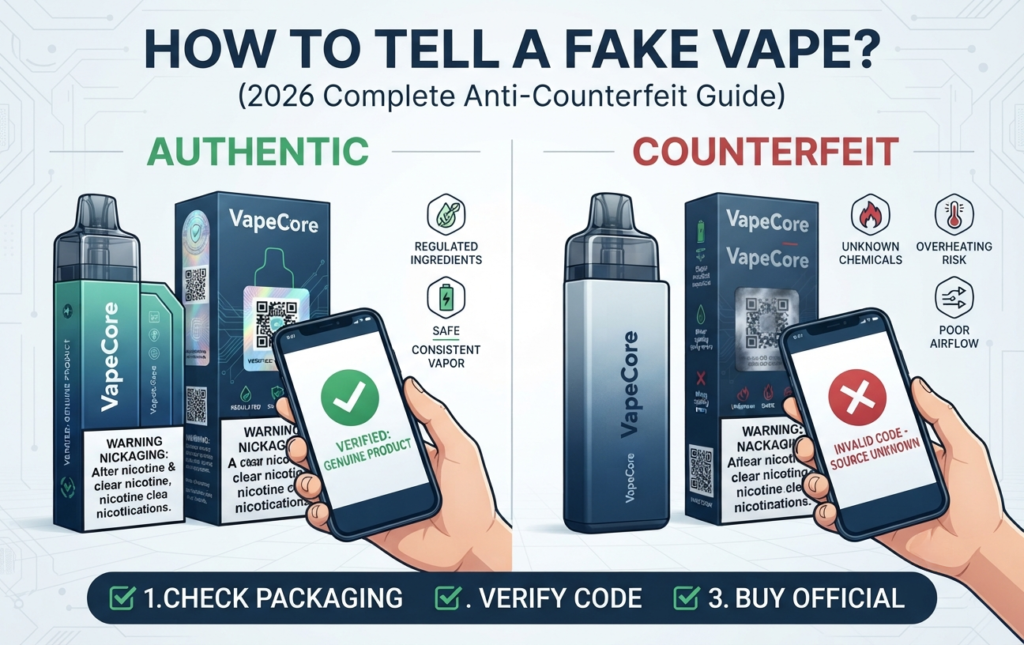
How to Tell a Fake Vape? (2026 Complete Anti-Counterfeit Guide)
Introduction
With the rapid growth of the vaping market, counterfeit products have become increasingly common. Fake vapes not only provide poor performance but may also pose serious health and safety risks.
This guide explains how to identify fake vapes by checking packaging, verification codes, official channels, and common risk signals.
1. Packaging Differences (Most Important Indicator)
Packaging is usually the first and easiest way to detect a fake vape.
Signs of a fake vape packaging:
Low-quality printing (blurry logos or text)
Color mismatch compared to official brand images
Spelling errors or inconsistent fonts
Missing safety warnings or regulatory labels
Weak or cheap-feeling box material
Signs of authentic packaging:
High-resolution printing and consistent branding
Clear nicotine warnings and compliance labels
Precise alignment of logos and text
QR code or scratch verification panel (on most brands)
�� Real brands invest heavily in packaging consistency. Counterfeit products usually fail in detail accuracy.
2. Verification Codes (Anti-Counterfeit System)
Most major vape brands include verification systems.
Common verification methods:
QR code scanning
Scratch-off authenticity codes
Serial number verification on official website
How to check:
Locate the verification code on the box
Scan or enter it on the official brand website
Confirm whether the product is authentic
Red flags:
Code does not exist or returns “already verified”
Website looks unofficial or suspicious
QR code redirects to unknown domains
3. Buying from Official Channels
One of the most effective ways to avoid fake vapes is purchasing from authorized sellers only.
Recommended official channels:
Brand official websites
Licensed vape retailers
Verified distributors
Authorized retail stores
High-risk sources:
Unknown marketplace sellers
Social media private sellers
Extremely low-price offers
Unverified online stores
�� If the price is “too good to be true,” it usually is.
4. Product Quality Differences
Fake vapes often show noticeable performance issues.
Common signs of fake products:
Weak or inconsistent vapor production
Burnt or chemical taste
Battery drains unusually fast
Device overheating
Poor airflow or leaking issues
Authentic products:
Stable vapor output
Consistent flavor profile
Safe battery performance
Smooth airflow experience
5. Health & Safety Risks of Fake Vapes
Fake vapes are not only low quality—they may also be dangerous.
Potential risks include:
Unknown or unregulated e-liquid ingredients
Heavy metal contamination from low-grade coils
Poor battery safety standards (risk of overheating)
Excess nicotine concentration inconsistencies
Scientific concern:
Studies on counterfeit vaping products show they are more likely to contain unverified chemical compositions, which increases potential toxic exposure risk compared to regulated products.
6. How to Avoid Fake Vapes (Practical Checklist)
Before buying, always check:
Is the seller officially authorized?
Does the packaging include a valid verification code?
Does the price match market average?
Does the website look professional and legitimate?
Are product reviews real and consistent?
Conclusion
Fake vapes are a growing issue in the global vaping market. The most reliable ways to avoid them are verifying packaging details, using official authentication systems, and purchasing only from authorized sellers.
Being cautious not only protects product quality but also reduces potential health and safety risks.
Scientific & Reference Sources
Regulatory Authorities
World Health Organization (WHO) – Tobacco and nicotine product safety overview
U.S. Food and Drug Administration (FDA) – Tobacco product compliance and counterfeit alerts
Australian Therapeutic Goods Administration (TGA) – Nicotine vaping regulation framework
UK Medicines and Healthcare products Regulatory Agency (MHRA) – Vape product standards and compliance
Public Health & Safety Research
Centers for Disease Control and Prevention (CDC) – E-cigarette product safety and risk reports
National Academies of Sciences, Engineering, and Medicine (NASEM, 2018) – E-cigarette product composition and safety review
Key Scientific Consensus
Counterfeit vape products are more likely to bypass regulated manufacturing standards (FDA reports)
Unregulated vaping liquids may contain unknown or inconsistent chemical compositions (CDC findings)
Product quality control significantly affects aerosol safety and chemical exposure levels (NASEM review)