
Nicotine Vaping in Australia: Prescription Rules and Consumer Guide
Australia has one of the most strictly regulated nicotine vaping systems in the world.
Unlike many countries where nicotine vapes can be purchased through general retail stores, Australia regulates nicotine vaping products through a controlled healthcare-based framework. For adult users, understanding prescription rules, pharmacy access, import restrictions, and product requirements is essential.
In 2026, nicotine vaping in Australia is primarily managed as a therapeutic product intended for:
- Smoking cessation support
- Management of nicotine dependence
- Controlled adult access
This guide explains how nicotine vaping products are regulated in Australia and what adult consumers need to know before accessing them.
Understanding Nicotine Vaping Regulations in Australia
Nicotine is a controlled substance under Australia’s therapeutic goods framework.
This means nicotine vaping products are not treated as ordinary consumer products. Their supply and access are regulated through national laws administered by the Therapeutic Goods Administration (TGA).
The regulatory approach focuses on:
- Restricting youth access
- Ensuring controlled supply
- Improving product standards
- Supporting adults who use vaping products as part of nicotine management
Under current regulations, nicotine vaping products can only be supplied through approved pathways, mainly involving participating pharmacies and healthcare professionals.
Are Nicotine Vapes Legal in Australia?
Yes, nicotine vaping products are legal in Australia, but access is restricted.
Adult users cannot purchase nicotine vapes through traditional retail channels such as:
- Convenience stores
- Supermarkets
- General retailers
- Unauthorised vape shops
Legal access is provided through regulated supply systems.
The current framework allows adults to access certain therapeutic vaping products through participating pharmacies, depending on nicotine concentration, state and territory laws, and individual circumstances.
How Can Adults Access Nicotine Vapes Legally?
There are two main pathways for accessing nicotine vaping products in Australia:
- Pharmacy supply pathway
- Prescription pathway
The appropriate pathway depends on factors including:
- Age
- Nicotine concentration
- State or territory regulations
- Individual health circumstances
Pathway 1: Pharmacy Access Without Prescription
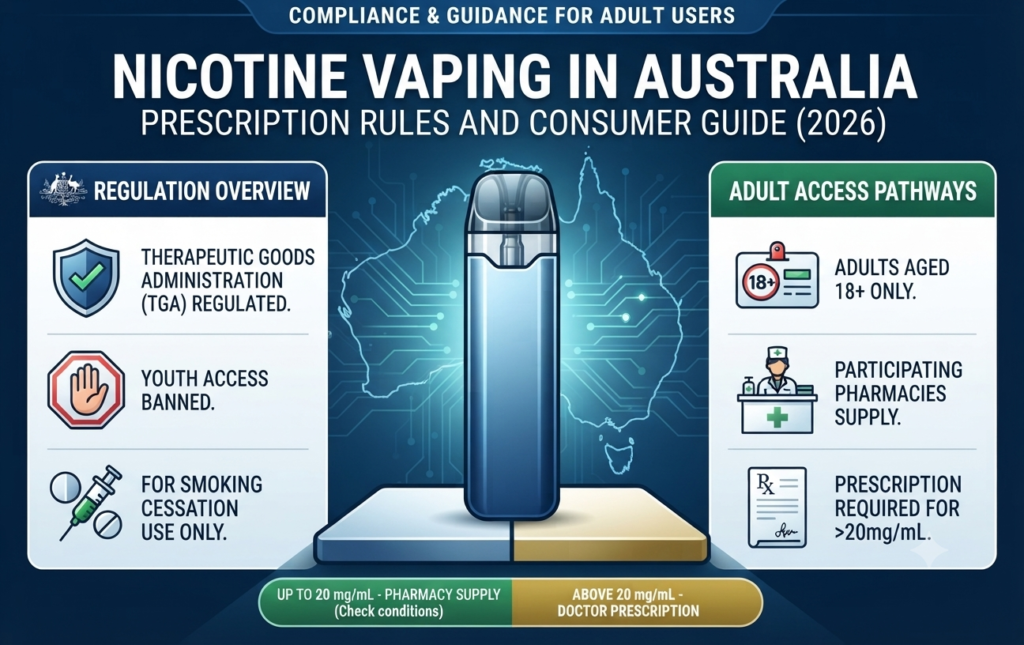
Since regulatory changes introduced in 2024, adults aged 18 years or older may access certain therapeutic vapes without a prescription under specific conditions.
Generally, this applies to:
- Adults aged 18+
- Nicotine concentrations of 20 mg/mL or less
- Supply through participating pharmacies
- Compliance with state and territory requirements
Before supply, pharmacists must assess whether the product is appropriate for smoking cessation or nicotine dependence management.
The pharmacist may provide:
- Advice on product use
- Information about alternative nicotine therapies
- Guidance on appropriate usage
Pathway 2: Prescription-Based Access
A prescription may be required in several situations.
This includes:
Higher Nicotine Concentrations
Nicotine vaping products containing more than 20 mg/mL require a prescription from an authorised medical or nurse practitioner.
Users Under 18 Years Old
People under 18 generally require a prescription where state and territory laws allow access.
Additional restrictions may apply depending on location.
Specific Medical Circumstances
A prescription may also be required when a healthcare professional determines that additional medical guidance is appropriate.
This may include situations involving:
- Complex nicotine dependence
- Other health considerations
- Need for professional support
What Nicotine Strengths Are Allowed?
Nicotine concentration is one of the most important regulatory factors.
Current Australian rules distinguish between:
Up to 20 mg/mL Nicotine
May be available to adults through participating pharmacies without a prescription, subject to requirements.
Above 20 mg/mL Nicotine
Requires a prescription.
Maximum Nicotine Limit
Therapeutic vapes containing more than 50 mg/mL nicotine are not permitted.
Why Does Australia Regulate Nicotine Vapes So Strictly?
The Australian government’s approach is based on several policy objectives.
1. Preventing Youth Nicotine Access
A major goal of regulation is reducing youth exposure to nicotine products.
Restrictions apply to:
- Sales channels
- Advertising
- Product supply
- Importation
2. Improving Product Control
Regulation aims to reduce the availability of products with:
- Unknown nicotine levels
- Poor manufacturing standards
- Missing safety information
- Unverified ingredients
Controlled supply channels allow greater oversight of products entering the market.
3. Supporting Smoking Cessation
The Australian regulatory model recognises therapeutic vaping products as tools that may support some adults managing nicotine dependence.
Healthcare involvement is intended to provide additional guidance and support.
Buying Nicotine Vapes From Overseas Websites
Many international vape websites sell products that may be legal in other countries but not compliant with Australian regulations.
Australian consumers should understand that overseas availability does not automatically mean legal access in Australia.
Importing nicotine vaping products may require appropriate permissions and compliance with Australian rules.
Australian Border Force may stop, seize, or investigate products that do not meet import requirements.
Can You Import Nicotine Vapes Into Australia?
Import rules are tightly controlled.
Vaping goods may include:
- Vape devices
- Vape liquids
- Nicotine-containing products
- Related accessories
Australian Border Force controls the importation of vaping goods, and certain products require prior permission before entering Australia.
Disposable Nicotine Vapes and Australian Regulations
Disposable vapes are one of the most affected categories under Australia’s vaping regulations.
Many disposable vape products commonly sold overseas are not legally available through Australian retail channels.
Consumers should be cautious because illegal products may involve:
- Incorrect nicotine labelling
- Counterfeit manufacturing
- Unknown battery quality
- Lack of safety testing
Purchasing only through legal supply pathways helps reduce these risks.
How to Identify Compliant Nicotine Vape Products
Adult consumers should consider several factors before purchasing.
1. Check the Supply Source
A legal product should come from:
✓ Participating pharmacies
✓ Approved supply channels
✓ Legitimate healthcare pathways
Avoid unofficial sellers offering unrestricted nicotine vape products.
2. Review Product Information
Consumers should look for:
- Manufacturer details
- Product information
- Nicotine concentration
- Appropriate packaging
3. Avoid Counterfeit Products
Popular vape brands can become targets for counterfeit production.
Fake products may contain:
- Incorrect nicotine levels
- Poor-quality batteries
- Unverified ingredients
Authenticity and legal supply are important considerations.
The Role of Pharmacists in Nicotine Vape Access
Pharmacists play a central role in Australia’s nicotine vaping system.
Their responsibilities may include:
- Confirming age eligibility
- Assessing suitability
- Providing usage advice
- Explaining alternative treatments
Pharmacists are not required to stock therapeutic vapes, meaning availability may vary between locations.
Nicotine Vaping Compared With Other Nicotine Replacement Options
Nicotine vaping is one option among several nicotine management approaches.
Other options may include:
- Nicotine patches
- Nicotine gum
- Nicotine lozenges
- Other registered therapies
Consumers should discuss available options with healthcare professionals to determine what approach best suits their circumstances.
The Future of Nicotine Vaping in Australia
Australia’s nicotine vaping framework is expected to continue evolving.
Future developments may focus on:
- Stronger product standards
- Improved compliance monitoring
- Better consumer education
- More controlled supply systems
As regulations become more established, legal access will increasingly depend on compliance, transparency, and responsible distribution.
What Australian Adult Vapers Should Remember
The key points are:
✓ Nicotine vapes are regulated therapeutic products in Australia
✓ Adults may access some products through participating pharmacies
✓ Higher nicotine concentrations require prescriptions
✓ Illegal retail sales and imports remain restricted
✓ Consumers should purchase only through legal channels
Understanding these rules helps adult users navigate Australia’s vaping system more safely and responsibly.
Final Thoughts
Nicotine vaping in Australia operates under a unique regulatory model that differs significantly from many international markets.
For adult consumers, the most important considerations are:
- Understanding prescription requirements
- Knowing pharmacy access rules
- Checking nicotine concentration limits
- Avoiding illegal supply channels
As Australia continues refining its vaping regulations, informed consumers and responsible brands will play an important role in creating a more controlled and transparent market environment.
References & Data Sources
Journal of Aerosol Science – Electronic Cigarette Aerosol and Device Research
https://www.sciencedirect.com/journal/journal-of-aerosol-science
Therapeutic Goods Administration (TGA) – Vapes: Information for Individuals and Patients
https://www.tga.gov.au
Therapeutic Goods Administration (TGA) – Vapes: Information for Prescribers
https://www.tga.gov.au
Therapeutic Goods Administration (TGA) – Vapes: Information for Pharmacists
https://www.tga.gov.au
Therapeutic Goods Administration (TGA) – Supplying Therapeutic Vapes in Pharmacies
https://www.tga.gov.au
Australian Border Force – Vaping Goods and Nicotine Import Restrictions
https://www.abf.gov.au
Australian Government Department of Health and Aged Care – Vaping Regulation Information
https://www.health.gov.au
National Academies of Sciences, Engineering, and Medicine – Public Health Consequences of E-Cigarettes
https://nap.nationalacademies.org/catalog/24952/public-health-consequences-of-e-cigarettes